


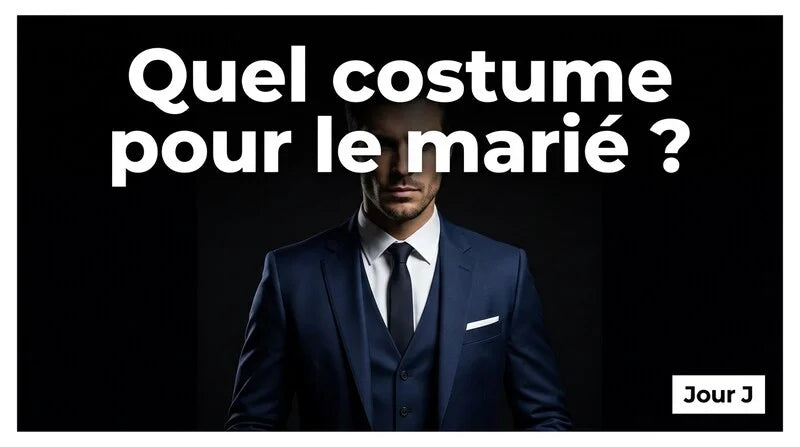
What suit should the groom wear? Choosing your wedding-day outfit
Contents▾
- Suit, dinner suit or morning suit: what to wear for each type of wedding
- Two-piece, three-piece or dinner suit: the cut that suits you
- The groom's build: the most flattering cut
- Colours, fabrics and the details that make the difference
- The groom's budget: what each price range is really worth
- Coordinating your outfit with the bride and the theme
- Countdown: when to buy, when to try on, when to sign off
- Mistakes to avoid on the big day
- A suit that reflects you, not the catalogue
Working out what suit the groom should wear comes down to three variables: how formal the ceremony is, the build of the man wearing it, and the budget available. A mid-grey three-piece for a daytime ceremony, a black dinner suit for an evening reception, a double-breasted jacket for a seaside wedding: every scenario has its standard, and the difference between a suit that fits beautifully and one that gives away the novice comes down to 4 or 5 technical details.
This article gives you a clear method, price range by price range and body shape by body shape, with a countdown to your fittings and a list of the mistakes that spoil the photos. The aim: to finish reading with a decision, not one more doubt.
Suit, dinner suit or morning suit: what to wear for each type of wedding
For a civil wedding or a daytime ceremony, the two- or three-piece suit remains the norm in France. A dinner suit is only justified from 6pm onwards, at an evening reception with a black-tie dress code. The morning suit, for its part, belongs to a very formal religious wedding, usually before 5pm, and has largely fallen out of use outside official ceremonies.
A boho or country wedding works well with a classic men's suit in linen or lightweight wool, worn without a tie and with the top button of the shirt undone. A classic city wedding calls for a fitted suit, with a tie or bow tie depending on the time of day. A seaside wedding allows lighter shades (beige, sky blue), but the cut should stay sharp: relaxed doesn't mean sloppy.
The rule that trumps all the others: the groom must never look underdressed next to his smartest guests. If in doubt about the dress code, better one piece too many than one too few.
Two-piece, three-piece or dinner suit: the cut that suits you
A two-piece suit (jacket + men's suit trousers) is enough for a modern or informal wedding, or a short day. The three-piece adds a waistcoat that structures the silhouette, defines the waist and lets you take off the jacket without breaking up the look during the drinks reception or the meal. It's the best compromise for a groom who will be on the move all day.
A dinner suit is recognisable by its satin lapels (peak or shawl), the satin stripe down the side of the trousers and the absence of a belt (you wear braces or a cummerbund instead). It only works with a white shirt, with a wing or classic collar, and a black bow tie. Any splash of colour on a classic dinner suit tips it into fancy dress.
- Two-piece: daytime wedding, civil ceremony, short reception
- Three-piece: full day-and-evening wedding, formal or semi-formal
- Dinner suit: evening reception, black tie, very formal ceremony
The groom's build: the most flattering cut
A good cut corrects; a bad cut accentuates. Here are our guidelines for each body type, tested over hundreds of alterations.
Tall and slim: a regular or slightly tapered fit, a two-button jacket, medium lapels (7 to 8 cm), and pleated trousers if you want to break up the vertical line. Avoid slim-fit suits, which exaggerate your height.
Tall and broad: a six-button double-breasted jacket, wide peak lapels, straight-leg trousers. The double-breasted cut structures the shoulders and disguises the stomach.
Short and slim: a slim or tailored fit, a shorter jacket (2 cm above the wrist crease), one button, narrow lapels. Flat-front trousers with a narrow leg, to visually lengthen the figure.
Short and stocky: two buttons, a jacket neither too short nor too long, medium lapels. Aim for verticality: discreet pinstripes, slim shoes, a shirt matched to the trousers to avoid a horizontal break.
Broad shoulders and a defined waist: a regular-fit suit with pleated trousers works very well. Avoid heavily padded shoulders, which only pile on volume.

Colours, fabrics and the details that make the difference
Navy remains the safest bet: it suits every skin tone, photographs well and can be worn again after the wedding. Mid to dark grey works just as well, with a softer light in photos. Black is reserved for a dinner suit or a very formal evening wedding. Beige, sky blue or bottle green come into their own at summer or themed weddings.
As for fabric, Super 100's to 120's wool remains the year-round standard. A Super 120's men's wool suit offers the best balance between shape retention and weight for a 12-hour day. Linen is the natural choice for a summer or country wedding, with creasing as an accepted drawback. A cotton blend is a comfortable, affordable option, but its drape falls short of wool's in photos. Avoid silk and very shiny fabrics: they catch the camera flash and turn the suit into a reflector.
A stretch suit with 2 to 3% elastane in the weave brings real comfort when you need to raise your arms (first dance, bouquet toss). To put together a coherent outfit, this guide to building a suit sets out the rules for pairing trousers, suit jacket and shirt.

The groom's budget: what each price range is really worth
The price of a wedding suit should be judged on three criteria: the fabric (origin, weight, composition), the construction (fused, half-canvassed, full-canvassed) and the alterations included. Here are concrete benchmarks for each price bracket.
Between €150 and €250: a polyester or poly-viscose suit with a fully fused jacket. Fine for a tight budget or a supporting role, but the drape shows in photos and the fabric runs hot. For a groom, best kept for very short ceremonies.
Between €400 and €700: wool blend or Super 100's, half-canvassed jacket, careful cut, alterations included. This is the best value for money for most grooms. You get a suit that hangs well, lasts a full day and can be worn again at future ceremonies.
Between €800 and €1,500: Italian Super 120's to 150's wool, full canvas, fit adjusted in the workshop, waistcoat included. You can feel the difference in the hand, in the way it sits on the shoulders and in how it holds up after 8 hours. A worthwhile investment if you wear a suit at least 10 times a year.
Over €1,500 (made to measure): justified if your build falls outside standard sizes (very rounded back, asymmetrical shoulders, very slim waist), or if you want a wardrobe for life. Allow 6 to 10 weeks and two to three fittings. To understand high-end fabrics, this guide to Super 120's, Barberis and Zegna suit fabrics covers the basics.
Coordinating your outfit with the bride and the theme
There's nothing mysterious about coordinating with the bride: you match the level of formality, not the colour. Fitted white dress + tailored suit; flowing boho dress + unstructured cut; princess dress + classic three-piece. The classic mistake is matching the tie to the colour of the bouquet or the floral theme. The result: it ages badly in photos.
When it comes to colour, a few reliable pointers. Ivory or champagne dress → navy, mid-grey or beige suit. Pure white dress → a darker suit (navy, charcoal, black). Boho wedding → beige, sand, terracotta. Seaside wedding → sky blue, off-white, linen. Classic church wedding → grey or dark blue, plain tie.
For your men's tie or bow tie, go for a plain shade or a very discreet pattern (pin dots, small checks). The pocket square can pick up a colour from the bouquet, but never match it exactly: you want a conversation, not an echo.
Countdown: when to buy, when to try on, when to sign off
Timing matters as much as the choice of suit. Too early, and you risk a change in weight that leaves the fit unusable. Too late, and there's no room for alterations.
- 6 months before: choose the style, the level of formality and the colour palette. First appointment in store to try different cuts without buying.
- 4 months before: order the suit (ready-to-wear with alterations) or start the made-to-measure process. Choose your suit accessories: shirt, tie, pocket square, men's suit belt.
- 2 months before: first fitting and final measurements for the alterations (hem, waist suppression, sleeve length).
- 1 month before: full fitting with shoes and accessories. Final sign-off.
- 2 weeks before: last adjustment if your weight has changed. A light dry clean if the suit has been tried on several times.
- 2 days before: hang the suit on a wide hanger and do a final check (buttons, hems, stains).
Mistakes to avoid on the big day
Nine grooms out of ten make at least one of these mistakes. Every one of them shows in the photos.
- Jacket sleeves too long: 1 to 1.5 cm of shirt cuff should show at the wrist. No more.
- A badly finished trouser hem: a slight break (a small fold over the shoe) or a clean, no-break finish. Never a double fold.
- The wrong shoes: black Oxfords with a dinner suit, brown or black Derbys or Oxfords with a classic suit. No loafers for the ceremony. See our selection of men's shoes.
- A belt with a dinner suit: never. Braces or a cummerbund only.
- Mismatched accessories: a sports watch with a formal suit, short socks that show bare skin when you sit down, odd cufflinks.
- A suit that's too tight: the middle button pulling, X-shaped creases across the chest. You won't be able to raise your arms, or breathe, for six hours straight.
- Fabric that's too shiny: avoid glossy polyester and garish satins, except on a dinner suit.
For a guest or best man, the logic is reversed: stand out without stealing the show. This piece on relaxed wedding outfits for male guests sets out the codes according to the time of day and the venue.
A suit that reflects you, not the catalogue
A well-dressed groom isn't one who follows a trend. He's a groom whose suit respects three things: his build, coherence with the bride, and an investment in proportion to how often he'll wear it afterwards. A well-altered €600 navy three-piece in Super 120's wool will always beat a €2,000 made-to-measure suit delivered without a fitting. No amount of technical refinement makes up for a lack of alterations.
Explore our groom's suits for a selection dedicated to ceremonies, or the full men's suits range to widen your choice by cut and fabric. The right suit is the one you'll still be wearing ten years after the wedding, not the one that follows this year's fashion.
